Monday, October 12, 2020

Streaks, Niggles, and Hypomania

All things must come to end. As of October 10, I had run 62 consecutive days and reached my 10,000 steps goal for 48 days. I hadn't kept track of my steps before, but my previous running streak record was 47 days.

This morning, I woke up feeling exhausted. After being up by 5:30 a.m. or earlier every weekday for a few weeks, I decided I was done with my running streak. I'd been having some little niggles in my feet and ankles (which I think were due to an old pair of shoes), so I decided that with the exhaustion and the niggles, it wouldn't be a bad idea to take a day off.  

I also cut back my mileage a bit because I read that it's possible that exercise can exacerbate or cause hypomania and mania, though whether exercise causes hypomania or mania or that excessive exercise is caused by mania or hypomania is not clear (Can Exercise Cause Mania?).

Tomorrow I'll be back at it, partly because I've come down from the mild hypomania I'd been feeling for a week or so and partly because exercise has a positive effect on depression. I generally get a little depressed after a hypomanic or manic episode, so staying active is important.

I enjoyed the running and steps streaks, but it feels right to let them end.

Be well.

Sunday, October 11, 2020

Running Tourism


Though we’ve definitely slowed down since we had our first kiddo, Laura and I love to travel. We have a few travel goals—we’d like to visit every state park in Minnesota and every national park. We’ve got a ways to go, but we’re planning on really amping it up in about twenty-five years. Besides those two big goals, Laura is also aiming to run a half marathon or farther in every state. So far she has done so in ten states. 

While I’m not planning on running any sort of race in every state, I absolutely love running in places we visit. I know some places have companies that give running tours, but as of now, our tours have been self-guided.

Now that we have a four-year-old and a nine-month-old, I like to reminisce about times when we had a little more freedom with our travels.

One of our favorite trips was a road trip to visit several national parks in Colorado and Utah. While at Arches National Park, we had a limited amount of time, so we did some run/walking to see more of the park. By doing so, we were able to see probably a third more of the park had we just walked. I also got to do a run at Black Canyon of the Gunnison National Park and got to see a little more of the park on foot.

The next year, we flew to San Francisco to tour the city and then drive to see some California national parks and run the Modesto Half Marathon. While we didn’t run in any national parks, we did do an awesome run over the Golden Gate Bridge and through Presido Park along the beach.
California Running

A year later, we did a trip out east, and I got in some amazing runs. Laura and I got to run together in Niagra Falls, Ontario as well as running the Shoreline Half Marathon at Hamlin Beach State Park along Lake Ontario in New York.
Shoreline Half Marathon

I’ve also got to run in numerous state parks including Nerstrand Big Woods State Park, Lake Bemidji State Park, and a memorable run in Banning State Park where I forgot running shorts and ran in some cargo shorts instead.
Banning State Park
Big Woods Run

How about you? Have you had any memorable runs in unfamiliar places?

Thursday, October 8, 2020

Cadence: Injury Prevention Update

 It's been a little over six months since I took all of March off to attempt to heal from an injury. I wrote in a previous post about some things I've done to reduce to risk of injury. You can read about it here.

The one thing I didn't mention in that post that I'm also doing to prevent injury is increasing my running cadence. Like many things involving the human body, there's not solid evidence that increased stride rate helps reduce injury risk, but there are some studies that indicate it might. You can read about stride rate and injury prevention from a couple perspectives (How to Prevent Injury by Improving Run Cadence by Laura Norris from the Runkeeper website and Does Running Cadence Predict Injury by Alex Hutchinson from Runner's World).  

The lowdown on cadence is mixed with some studies suggesting that increasing stride rate may help prevent injury and some studies showing that there is no significant distance. From what I've read, I decided that increasing my stride rate may be helpful.

In the "How to Prevent Injury by Improving Run Cadence," Norris suggests that rather than working to a magic number, one should increase stride rate incrementally by 5%. Then, if that runner is staying healthy, she or he can increase cadence again if they desire.

Read the Runkeeper article above for how to set up tracking and setting a desired stride rate. If you don't have a smart watch or app on your phone that tracks stride rate, you can simply count your steps for a minute several times during a run to calculate your stride rate. Be aware that stride rate changes depending on how fast you are running.

I worked on increasing my stride rate with the help of Maelz Sport. I like the app's simplicity and the fact that it will keep beeping when listening to a podcast or recorded book.

I've successfully increase my stride rate by 3 - 5 % depending on the run. My stride rate was fairly high to begin with, so I didn't see a need to try and increase it more than that.

So, if you're frequently injured I'd say that as long as you increase your stride rate slowly it may be worth a shot to see if you can reduce your injuries.

Run well.

Saturday, October 3, 2020

Gross Workout of the Week


I have no idea why I'm smiling in the above photo. I had just finished my grossest run ever — sixteen miles, three of which were filled with bugs. I was running along the Minnesota River on the Minnesota River Greenway Trail when a bug flew into my eye. It's my least favorite thing to happen on a run followed by a bug in my throat.

So I keep going and I'm noticing more and more bugs. I'm not an entomologist, but I would call the tiny hell beasts gnats. And they were awful.

What started as a bug in my eye turned into clouds — not an exaggeration — of disgusting little bugs. I could feel myself running through them, and with their fragile little wings, rather than bounce off me, they stuck to my arms, chest, and face. The picture above doesn't even do it justice. I wiped off my arms several times, and my arms still looked like this:


Gross. When my run was finished and I got to a mirror, I took three bugs out of my eye.

So my other runs this week were nice. The fall temperatures have been perfect, and the only downside to my runs is that I'm running really early, so it's dark outside and I have to wear a headlamp.

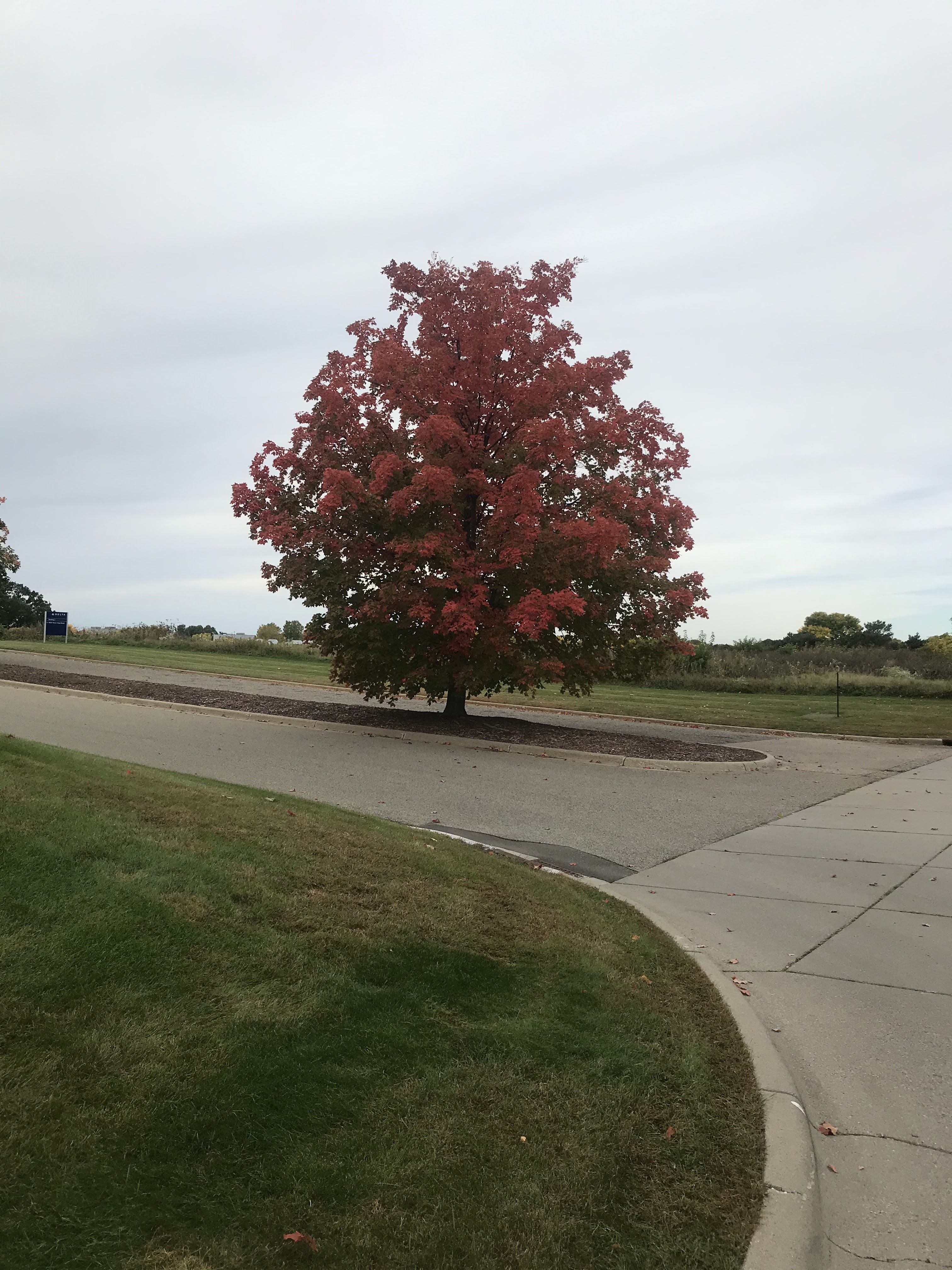
Weekends when I run in daylight have been nice. After those gross pictures of gnats, here's a picture of a tree I ran by:


Tuesday, September 29, 2020

Virtual Races


Without almost any in-person races going on, many are turning to virtual events. An event I've been doing is the (not) parkrun. Parkrun is a free 5K run every Saturday in various places around the world. Laura and I used to do one in Eagan, Minn. fairly regularly. Now, without the in-person event, parkrun has started the (not) parkrun. In the (not) parkrun, one submits her or his time to the website to appear in the results.

Before this year, I did one virtual run over ten years ago, the Global Warming My Ass Run (not an anti-science run, just a nod to beating cold weather). My race report can be found at: Virtual Race Report: GWMA. I enjoyed it and enjoyed writing a race report about a course I created myself.

There are two things I enjoy about virtual runs. First, you can pick the course and make it as hard or as easy as you like. Secondly, in most events, you can pick the day and time. This means you can work around your schedule as well as the weather.

Some of the downsides of virtual runs include the lack of race day excitement, no crowd support, no finish line fun, and no physical competition.

Another downside I've run into is the ease one can give up on the race when having a bad day. One day, I was planning on doing a (not) parkrun, but just wasn't feeling great. After running two miles and looking at my pace, I decided to bag the run and "drop out" of the virtual race. Had it been an actual race, I almost certainly would have toughed it out and finished, even if my time wouldn't have been great.

There are many virtual races out there, some free and some at a cost that includes swag like medals, hats, and shirts. I decided since I already have a crap ton of running gear and medals, I'm going to stick to the free 5Ks. I'm also signed up for the free version of the Marathon Training Academy's Social Distancing Run. I'm planning on making it a marathon that I'll run around my 38th birthday.

Anyone run a virtual race this year or thinking of running one? What do you think?

Saturday, September 26, 2020

Workout of the Week

Most of the training plans I write are pretty similar. I set up three harder days each week and the rest of the runs easy to very easy. Some plans only have two harder days per week (or none if it's a plan for a beginner or someone returning from injury), but three is standard for someone looking to run a fast race. Of those three workouts, one is a faster workout done around 5K pace, one is a tempo (sometimes called threshold) workout  done around half marathon to 10 mile pace, and one is a long run.

Structuring my week with those three workouts has worked well for me in the past, so I figured on this training plan I'd stick with it.

A key workout this past week was a tempo run. The workout consisted of one mile of easy running followed by 30 minutes at tempo pace and finished off with about two miles of easy running.

The workout went great. I ran the 30 minutes of tempo pace at 6:19 per mile.

While I'm glad I hit my pace, I don't worry as much about pace during a tempo workout. Instead of having a set goal for a set distance like an interval workout, I tend to do my tempo runs more by feel. I like to call tempo runs, "comfortably hard." When I do a tempo run, I'll often not even check my pace until halfway through or so. Instead, I'll run what feels like a pace I could sustain for about an hour. I also use my breathing as a guide and sometimes check in by making sure I can say a couple words strung together but not more or less.

These workouts have been going well for me and that has me feeling good about my goal of breaking 18 minutes in the 5K. I'm also planning on a virtual marathon, and after a couple more weeks of training and seeing how my workouts are going, I'll have some ideas of what I'm capable of in the marathon.

Saturday, September 19, 2020

Workout of the Week

A couple of weeks ago, I started doing some workouts. Before that, it had been all easy runs. My goal for the year of breaking 18 minutes in the 5K led me to start doing workouts again.

In the past, I’ve shared my training log, but from now until I run a virtual marathon in November, I’ll share a key workout I’ve completed each week. Last week I did a tempo run and an interval workout. Both went great, but I’ll share my interval workout since it went particularly well.

When training for a 5K, I’ve set up interval workouts that best mimic the effort of racing a 5K. The key workouts in my progression are 6 X 0.5 miles at 5K pace with two minute recoveries, 5 X 1K at 5K pace with two minute recoveries, and 3 X 1 mile pace with two minute recoveries.

Last week my workout was 6 X 0.5 miles at 5K pace. I’ve been a little discouraged because my goal of breaking 18 minutes in the 5K has been looking unlikely based on my previous attempts, but this workout gave me a lot of confidence.

After a warmup, I jumped into the intervals. Here’s how they shook out according to minutes-per-mile pace.

1 - 5:49 / mile
2 - 5:38 / mile
3 - 5:26 / mile
4 - 5:40 / mile
5 - 5:32 / mile
6 - 5:28 / mile

The big pro from this workout was that I ran every interval but one at a pace fast enough to run a sub-18 minute 5K. It’s exciting to me that those intervals didn’t seem overly taxing — I wasn’t completely spent after the last one and the next day I wasn’t really sore. 

The con coming out of the workout was that I wasn’t very consistent.

After running this workout, I had some confidence on my next 5K attempt. I managed an 18:08 — a big improvement from my previous season best of 18:45.

Next week I’ll share another workout. I’m hoping it goes as well as this one.